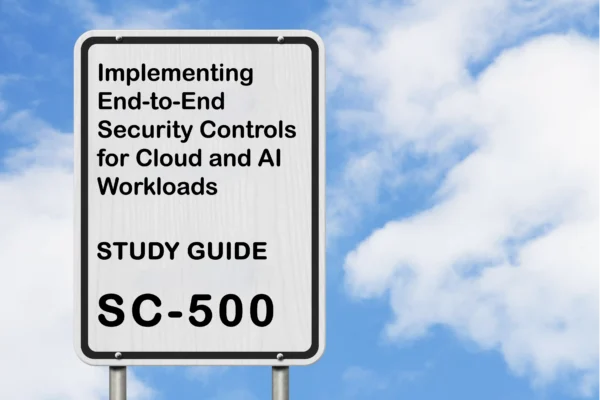
SC-500 Preparation Details
Preparing for the SC-500 Implementing End-to-End Security Controls for Cloud and AI Workloads certification exam? Start here with a complete, objective-wise SC-500 study guide designed to help you pass faster.
This guide brings together official Microsoft documentation, key concepts, and curated resources for every SC-500 exam objective, making it ideal for both beginners and last-minute revision.
Looking for the best SC-500 preparation resources in one place? This page covers everything you need to get exam-ready with confidence.
If this helped you, share it with others preparing for the SC-500 certification exam.
Exam Voucher for SC-500 with 1 Retake
Get 40% OFF with the combo
SC-500 MS Information Admin Prep
| Coursera | Securing Compute, Storage, and Databases in Azure |
| Udemy | Cloud & AI Security Engineer Exam Prep |
Looking for SC-500 Dumps? Read This!
Using sc-500 exam dumps can get you permanently banned from taking any future Microsoft certificate exam. Read the FAQ page for more information. However, I strongly suggest you validate your understanding with practice questions.
Check out all the other Microsoft 365 certificate study guides
Full Disclosure: Some of the links in this post are affiliate links. I receive a commission when you purchase through them.
Manage identity, access, and governance (20–25%)
Secure access to resources by using Microsoft Entra ID
Implement and configure Privileged Identity Management (PIM)
Plan a Privileged Identity Management deployment
What is Privileged Identity Management?
Configure Microsoft Entra role settings in Privileged Identity Management
Implement conditional access policies
Plan a Conditional Access deployment
Building a Conditional Access policy
Common Conditional Access policies
Implement and configure authentication methods, including multifactor authentication (MFA) and passwordless
Authentication methods in Microsoft Entra ID
Plan a passwordless authentication deployment in Microsoft Entra ID
Deployment considerations for Microsoft Entra multifactor authentication
Implement and configure identity for applications, including enterprise applications and app registrations
Apps and service principals in Microsoft Entra ID
How to register an app in Microsoft Entra ID
Manage access to an application – Microsoft Entra
Manage OAuth permission grants and consent settings
Permissions and consent in the Microsoft identity platform
Configure how end-users consent to applications
Configure admin consent workflow – Microsoft Entra
Implement and configure managed identities for Azure resources
What are managed identities for Azure resources?
Managed identities for Azure resources – best practices
Secure secrets and keys by using Azure Key Vault
Deploy Key Vault
Azure Key Vault basic concepts
Quickstart: Create a key vault using the Azure portal
Configure Key Vault settings
Azure Key Vault soft-delete overview
Configure access to Key Vault
Provide access to Key Vault keys, certificates, and secrets with RBAC
Authentication in Azure Key Vault
Configure firewall settings on Key Vault
Configure network security for Azure Key Vault
Access Azure Key Vault behind a firewall
Configure Azure Key Vault networking settings – Training
Manage keys, secrets, and certificates
About Azure Key Vault certificates
Scan for secrets by using Defender Cloud Security Posture Management (Defender CSPM)
Secret scanning in Defender for Cloud
Agentless secret scanning in Defender for Cloud
Implement Defender for Key Vault
Microsoft Defender for Key Vault – the benefits and features
Protect your key vaults with the Defender for Key Vault plan
Implement governance to enforce security and regulatory compliance
Implement and configure security controls by using Azure Policy, including built-in and custom policy definitions
Create and manage policies to enforce compliance
Azure Policy definitions for Microsoft Defender for Cloud
Evaluate regulatory compliance by using Microsoft Defender for Cloud
Assign regulatory compliance standards in Microsoft Defender for Cloud
Improve your regulatory compliance
Implement and configure security controls in Defender for Cloud, including security standards and recommendations
Security policies in Microsoft Defender for Cloud
Security recommendations in Defender for Cloud
Remediate security recommendations in Defender for Cloud
Implement resource locks
Lock your resources to protect your infrastructure – Azure Resource Manager
Manage Azure built-in role assignments
Assign Azure roles using the Azure portal
Manage custom roles, including Azure roles and Microsoft Entra roles
Create or update Azure custom roles
Create and assign a custom role in Microsoft Entra ID
Evaluate and remediate overprivileged access assignments by using Azure role-based access control (RBAC)
What is Microsoft Entra ID Governance?
Plan an Azure RBAC least privilege access review
Create an access review of Azure resource and Microsoft Entra roles in PIM
Configure security controls for backup protection by using Azure Backup security features
Security features to help protect hybrid backups from attacks – Azure Backup
Enhanced security for Azure Backup using Azure Backup vault
Implement and configure security controls by using infrastructure as code
Secure DevOps – Microsoft Cloud Adoption Framework
Security through code – GitHub Advanced Security integration with Defender for Cloud
Secure storage, databases, and networking (25–30%)
Implement security for storage accounts
Implement and configure security for storage accounts
Security recommendations for Blob storage – Azure Storage
Azure Storage network security overview
Configure Azure Storage firewall rules
Configure Azure Storage firewalls and virtual networks
Guidelines and limitations: Azure Storage firewall
Implement Defender for Storage threat protection configurations
Deploy Microsoft Defender for Storage – Microsoft Defender for Cloud
What is Microsoft Defender for Storage?
Enable Defender for Storage by using the Azure portal
Manage access to storage, including access policies
Authorize access to data in Azure Storage
Manage storage account access keys
Implement security for databases
Implement platform-level security configurations in Azure SQL
Security overview – Azure SQL Database & Azure SQL Managed Instance
Playbook for addressing common security requirements – Azure SQL
Azure database security checklist
Configure database auditing for Azure SQL Database and Azure SQL Managed Instance
Auditing for Azure SQL Database and Azure Synapse Analytics
Auditing for Azure SQL Managed Instance
Configure Defender for Databases protection across Azure database services
Microsoft Defender for SQL – Azure SQL Database & SQL Managed Instance
Benefits and features of Defender for Azure SQL Databases
Configure Microsoft Defender for SQL for Azure SQL Managed Instance
Implement security for Azure network services
Implement and manage network security groups (NSGs) and application security groups (ASGs)
Azure network security overview
Network security groups overview
Application security groups overview
Implement and configure network access policies by using Azure Virtual Network Manager
What is Azure Virtual Network Manager?
Create a security admin configuration in Azure Virtual Network Manager
Configure security for an Azure Virtual WAN
Azure Virtual WAN security baseline
Deploy and configure Azure Firewall in a Virtual WAN hub
Implement and configure security for virtual private network (VPN) connections
Secure your VPN Gateway deployment
VPN Gateway overview – Azure VPN Gateway
Implement and configure Microsoft Entra Private Access
What is Microsoft Entra Private Access?
Configure Microsoft Entra Private Access
Configure Azure private endpoints to secure access to Azure platform as a service (PaaS) resources
What is Azure Private Endpoint?
Create a private endpoint – Azure portal
Configure Azure Private Link services to secure access to network resources
Implement and configure Azure Firewall
Deploy and configure Azure Firewall using the Azure portal
Azure Firewall Premium features
Evaluate effective security rules by using Azure Network Watcher diagnostics
What is Azure Network Watcher?
IP flow verify – Network Watcher
Diagnose a virtual machine routing problem – Azure Network Watcher
Secure compute (20–25%)
Implement security for AI
Identify overexposure of data in SharePoint
Copilot Control System Security and Governance – Microsoft 365 Copilot
Use Microsoft Purview to manage data security and compliance for Microsoft 365 Copilot
Identify risks related to Microsoft Copilot and AI apps by using Microsoft Purview Data Security Posture Management (DSPM)
Learn about Data Security Posture Management (DSPM) for AI – Microsoft Purview
Enable and configure real-time protection for Microsoft Copilot Studio agents
Use Microsoft Purview to manage data security and compliance for Microsoft Copilot Studio
Detect, block, and investigate threats to AI agents using Microsoft Defender
Implement conditional access for Microsoft Entra Agent ID
Conditional Access for Agent Identities in Microsoft Entra
Microsoft Entra security for AI overview – Microsoft Entra Agent ID
Analyze blast radius for security risks related to Entra Agent ID by using Defender XDR
Detect, block, and investigate threats to AI agents using Microsoft Defender
Agent identity concepts in Microsoft Foundry
Manage Entra Agent ID access
Microsoft Entra security for AI overview – Microsoft Entra Agent ID
Secure AI agents at scale using Microsoft Agent 365
Configure and deploy AI Gateway in Azure API Management for Microsoft Foundry
Azure API Management policy for Azure OpenAI overview
AI gateway capabilities in Azure API Management
Enable Defender for AI Service in Cloud Workload Protection in Defender for Cloud
Enable threat protection for AI workloads – Microsoft Defender for Cloud
Reference table for all AI security recommendations in Defender for Cloud
Configure guardrails for agent security in Foundry
Guardrails and controls overview in Microsoft Foundry
Reference table for all AI security recommendations in Defender for Cloud
Monitor AI security by using the Data and AI security dashboard in Defender for Cloud
Enable threat protection for AI workloads – Microsoft Defender for Cloud
Data and AI security overview in Microsoft Defender for Cloud
Manage agents in Microsoft 365 admin center
Agent Registry in the Microsoft 365 admin center
Agents admin guide for Microsoft 365
Implement security for servers and virtual machines (VMs)
Implement and configure disk encryption
Azure Disk Encryption for Windows VMs
Azure Disk Encryption for Linux VMs
Apply Zero Trust principles to virtual machines in Azure
Plan and implement Azure Bastion
Quickstart: Deploy Azure Bastion
Enable and enforce use of just-in-time (JIT) VM access
Enable just-in-time access on VMs – Microsoft Defender for Cloud
Understand JIT VM access in Microsoft Defender for Cloud
Extend security controls to hybrid and multicloud servers by using Azure Arc
What is Azure Arc-enabled servers?
Security overview for Azure Arc-enabled servers
Onboard servers to Defender for Servers in Defender for Cloud, including hybrid and multicloud scenarios
Planning for Defender for Servers deployment
Connect your non-Azure machines to Microsoft Defender for Cloud
Configure Defender for Servers settings, including vulnerability scanning, and endpoint detection and response (EDR)
Overview of Microsoft Defender for Servers
Configure Microsoft Defender for Endpoint integration in Defender for Cloud
Implement and manage agentless scanning for VMs in Defender for Servers
Enable agentless scanning for VMs – Microsoft Defender for Cloud
Agentless machine scanning for Defender for Cloud
Configure security features on a VM, including secure boot, virtual Trusted Platform Module (vTPM), integrity monitoring, and security type
Trusted launch for Azure virtual machines
Security features used with Azure VMs
Enforce security configuration of Azure-managed servers by using Azure Machine Configuration
Azure Machine Configuration overview
Understand the assignment structure of Azure Machine Configuration
Implement security for application platform services
Detect misconfigurations and runtime risks in container workloads by using Defender for Containers
Overview of Microsoft Defender for Containers
Defender for Containers deployment overview – Microsoft Defender for Cloud
Implement and configure security controls for Azure Kubernetes Service (AKS)
Enable Defender for Containers in Microsoft Defender for Cloud
Security concepts in Azure Kubernetes Service (AKS)
Implement and configure security controls for Azure Container Registry
Azure Container Registry security overview
Container image vulnerability assessment for ACR – Defender for Cloud
Implement and configure security controls for Azure Container Instances and Azure Container Apps
Azure Container Instances security
Security baseline for Azure Container Instances
Implement and configure security controls for Azure Functions, including authentication and network access
Configure Azure Functions networking options
Implement and configure security controls for Azure Logic Apps
Implement and configure security controls for Azure App Service
Authentication and authorization in Azure App Service
Implement and configure Azure Web Application Firewall
What is Azure Web Application Firewall?
Azure Web Application Firewall on Azure Application Gateway
Implement security policies for back-end API protection by using API Management
Secure APIs using Azure API Management
AI gateway capabilities in Azure API Management
Manage and monitor security posture (20–25%)
Manage security posture by using Defender for Cloud
Identify security risks by using Defender CSPM
What is Cloud Security Posture Management (CSPM) – Microsoft Defender for Cloud
Protect your resources with Defender CSPM – Microsoft Defender for Cloud
Manage Security Posture by Using Microsoft Defender for Cloud – Training
Evaluate compliance against security frameworks by using Defender for Cloud
Improve your regulatory compliance – Microsoft Defender for Cloud
Assign regulatory compliance standards in Microsoft Defender for Cloud
Enable and configure Defender for Cloud workload protection plans
Microsoft Defender for Cloud Overview
Enable enhanced protections – Microsoft Defender for Cloud
Connect hybrid cloud and multicloud environments to Defender for Cloud, including Amazon Web Services (AWS) and Google Cloud Platform (GCP)
Connect your AWS accounts to Microsoft Defender for Cloud
Connect your GCP projects to Microsoft Defender for Cloud
Planning multicloud security – Defender for Cloud
Configure Microsoft Defender Vulnerability Management settings for Azure VMs
Overview of Microsoft Defender for Servers
Enable agentless scanning for VMs – Microsoft Defender for Cloud
Discover unprotected assets and vulnerabilities by using Microsoft Defender External Attack Surface Management (EASM)
External attack surface management in Defender for Cloud
What is Microsoft Defender External Attack Surface Management?
Implement activity and event collection in Microsoft Sentinel
Create and connect workspaces in Microsoft Sentinel
Design a Microsoft Sentinel workspace architecture
Assign roles in Microsoft Sentinel
Roles and permissions in the Microsoft Sentinel platform
Implement and use content hub solutions
Discover and manage Microsoft Sentinel out-of-the-box content
About Microsoft Sentinel content hub catalog
Configure and use Microsoft data connectors for Azure resources
Microsoft Sentinel data connectors
Find your Microsoft Sentinel data connector
Implement and configure syslog and Common Event Format (CEF) event collections
Ingest syslog and CEF messages to Microsoft Sentinel with Azure Monitor Agent
Syslog and CEF via AMA connectors – Microsoft Sentinel
Implement and configure collection of Windows Security events by using data collection rules, including Windows Event Forwarding (WEF)
Windows Security Events via AMA connector for Microsoft Sentinel
Best practices for data collection in Microsoft Sentinel
Create custom log tables in the workspace to store ingested data
Create a custom table in a Log Analytics workspace
Microsoft Sentinel data connectors
Implement automation rules and playbooks in Microsoft Sentinel
Automate threat response with automation rules in Microsoft Sentinel
Automate threat response with playbooks in Microsoft Sentinel
Implement data retention in Microsoft Sentinel data stores
Configure interactive and long-term data retention in Microsoft Sentinel
Data retention, archiving, search, and restore in Microsoft Sentinel
Query Microsoft Purview Audit in Defender XDR
Search the audit log for events in Microsoft Defender XDR
Search the audit log in the Microsoft Purview portal
Implement Microsoft Security Copilot
Configure workspaces for Security Copilot
Manage workspaces in Microsoft Security Copilot
Deploy and Operate Microsoft Security Copilot – Training
Manage permissions and roles in Security Copilot
Understand authentication in Microsoft Security Copilot
Assign roles in Microsoft Security Copilot
Enable and configure plugins
Manage plugins in Microsoft Security Copilot
Manage Plugins and Agents in Microsoft Security Copilot – Training
Enable and configure Microsoft agents and Security Store agents
Setup and manage Security Copilot agents
Manage Plugins and Agents in Microsoft Security Copilot – Training
Security Copilot Agent Development Overview
This brings us to the end of the SC-500 Implementing End-to-End Security Controls for Cloud and AI Workloads exam study guide.
What do you think? Let me know in the comments section if I have missed out on anything. Also, I love to hear from you how your preparation is going on!
In case you are preparing for other Microsoft 365 certification exams, check out the Microsoft 365 study guides for those exams.
Follow Me to Receive Updates on SC-500 Exam
Want to be notified as soon as I post? Subscribe to the RSS feed / leave your email address in the subscribe section. Share the article to your social networks with the below links so it can benefit others.